How to Choose a Reliable Cotton Fabric Manufacturer in India
India has a diverse textile industry serving businesses across apparel, home textiles, bags, accessories and industrial applications. For companies sourcing cotton fabric, choosing the right manufacturer is an important step towards maintaining product consistency, managing costs and meeting customer expectations.
However, comparing fabric suppliers involves more than reviewing a price list. Buyers need to evaluate technical specifications, sample quality, production capabilities, communication and delivery requirements before committing to a bulk order.
In this guide, we explain how to assess a cotton fabric manufacturer in India and make a more informed sourcing decision.
1. Understand Your Fabric Requirements First
Before contacting manufacturers, define what you need. A clear specification helps suppliers recommend appropriate materials and provide more comparable quotations.
Start by identifying:
- Intended application, such as tote bags, apparel, shopping bags or accessories.
- Required fibre composition.
- Fabric construction, such as plain weave, twill, canvas or duck.
- Target GSM and acceptable tolerance.
- Required fabric width.
- Colour, finish and surface appearance.
- Estimated order quantity.
- Testing or documentation requirements.
If you are still developing your product, explain its intended use and ask the manufacturer which samples may be appropriate for evaluation.
2. Evaluate Fabric Quality
Fabric quality should be assessed against your product requirements rather than appearance alone.
Request samples and review the construction, surface, colour and overall consistency.
Depending on the intended application, you may also need to evaluate:
Fabric weight: Confirm the GSM and acceptable variation.
Weave consistency: Check for visible irregularities and whether the construction matches the agreed specification.
Colour consistency: Compare samples under consistent lighting and establish an approval process for bulk production.
Dimensional stability: Consider shrinkage or other dimensional changes when the fabric will be washed or processed.
Performance: For products requiring specific strength or durability, identify suitable tests rather than relying only on visual inspection.
The relevant quality checks depend on the fabric type and how the finished product will be used.
3. Check the Manufacturer's Product Range
Different applications require different fabric constructions. A manufacturer with experience in the types of material you need may be better positioned to discuss specifications and sample options.
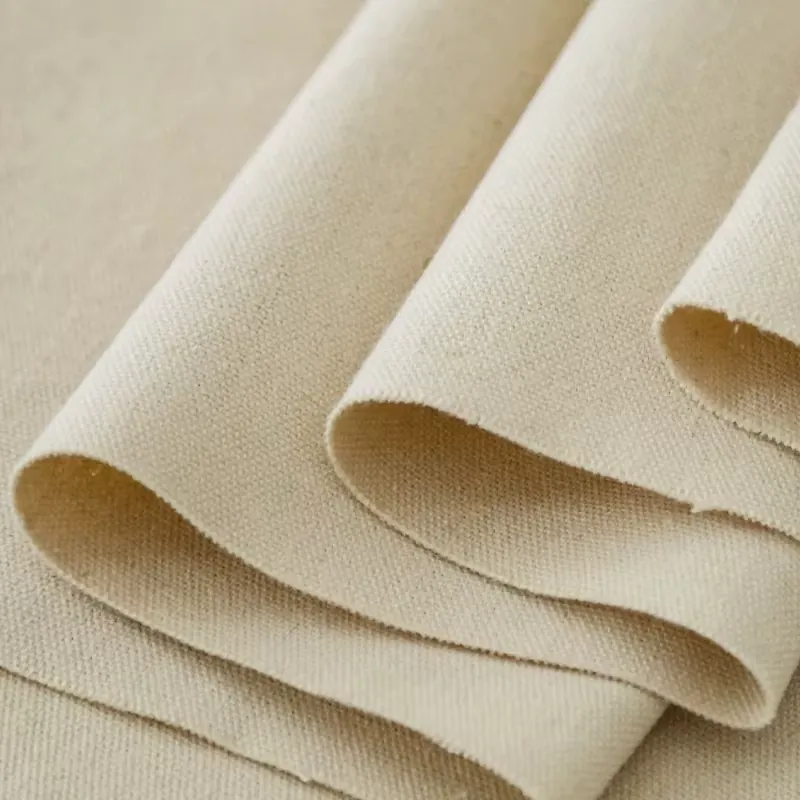
For example, buyers sourcing cotton fabric for bags may explore cotton canvas, cotton duck, cotton twill or other suitable woven constructions.
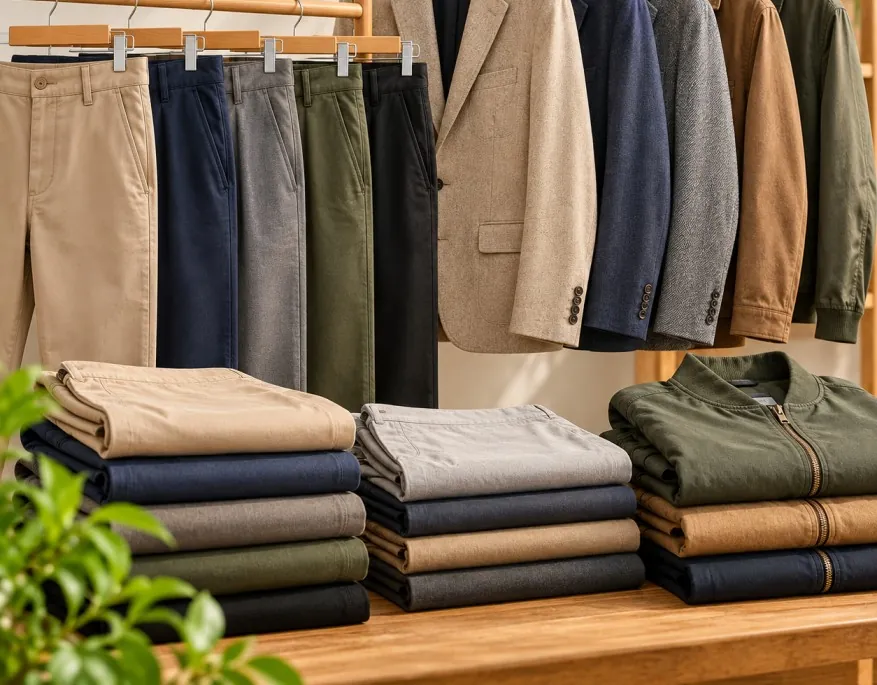
Apparel buyers may need different weights, surface characteristics and finishing options.
Ask whether the manufacturer can supply the fabric type, composition, weight, width and finish required for your project. Do not assume that every supplier offers every construction or customisation option.
4. Ask About Customisation Options
Many B2B projects require fabric specifications tailored to a particular product or brand.
Depending on the manufacturer's capabilities, customisation may involve:
- Fabric weight and width.
- Fibre composition or blends.
- Colour selection.
- Weave construction.
- Finishing requirements.
- Special packaging or order specifications.
Explain your requirements clearly and request written confirmation of what can be supplied.
If your product depends on a particular shade, texture or finish, approve a sample before authorising bulk production.
5. Understand Minimum Order Quantities and Pricing
Fabric prices can vary according to fibre composition, yarn specifications, GSM, width, finishing, order quantity and market conditions.
A lower quotation does not necessarily represent better value if the material differs from your required specification.
When comparing suppliers, confirm:
- Price per metre or another agreed unit.
- Minimum order quantity.
- Whether taxes and other charges are included.
- Sample and development costs, where applicable.
- Payment terms.
- Production lead time.
- Packaging and transportation arrangements.
- Conditions for repeat orders.
Make sure each quotation refers to the same or a clearly comparable specification. This helps avoid comparing prices for fabrics that are technically different.
6. Confirm Production Capacity and Lead Times
For businesses operating on production schedules, delivery timing can be as important as fabric quality.
Discuss your expected quantity, required delivery date and the manufacturer's ability to meet the order schedule.
Ask how production timelines are confirmed and how changes or delays are communicated.
If you expect to place recurring orders, discuss how the manufacturer records approved specifications and manages repeat orders.
Production capacity and lead times should be confirmed directly with the supplier for the specific order rather than assumed from general company descriptions.
7. Review Certifications and Supporting Documents
Some projects require particular certifications, fibre-content documentation or supply-chain records.
If these are important to your business, identify the exact requirement before requesting a quotation.
Ask the manufacturer for relevant documentation and check its validity, scope and applicability to the specific material or order.
For example, a buyer requiring certified recycled material should confirm that the applicable certification and transaction documentation cover the relevant supply chain.
Do not rely solely on a general certification statement or logo. Verify the records required for your purchasing and compliance process.
8. Assess Communication and Customer Support
Clear communication helps reduce errors during product development and bulk purchasing.
A suitable supplier should be able to discuss fabric specifications, clarify technical questions and provide written confirmation of the agreed requirements.
During the initial enquiry, observe whether the supplier responds clearly to questions about samples, GSM, width, colour, order quantities and delivery expectations.
Keep important specifications and approvals in writing so that both parties can refer to the same information during production.
9. Common Mistakes to Avoid When Selecting a Fabric Manufacturer
Avoid these common sourcing mistakes:
Choosing only by price: The lowest price may not reflect the required construction or quality.
Skipping samples: A sample review can help identify differences before a large order is placed.
Using vague specifications: Terms such as “heavy cotton” or “premium fabric” are not substitutes for measurable requirements.
Ignoring tolerances: Agree on acceptable variation in GSM, width, colour and other important specifications.
Overlooking documentation: Confirm required certificates and records before production.
Failing to plan repeat orders: Retain approved samples and written specifications to support future purchases.
10. A Practical Checklist Before Placing Your Order
Before confirming a bulk fabric order, make sure you have:
- Defined the fibre composition and fabric construction.
- Confirmed GSM, width and tolerances.
- Reviewed and approved the sample.
- Agreed on colour and finishing.
- Confirmed pricing, minimum quantity and payment terms.
- Established the expected production and delivery schedule.
- Requested any necessary documentation.
- Received written confirmation of the order specification.
This simple process can help buyers compare suppliers more effectively and reduce misunderstandings during production.
Choosing a Fabric Sourcing Partner
The right manufacturer is one whose products, technical capabilities, communication and commercial terms align with your business requirements.
For textile buyers, a well-defined specification and a structured sample-approval process are valuable starting points. They help establish clear expectations before production begins.
SSPL Textile offers a range of woven fabric options for businesses to explore. If you are sourcing cotton fabric for bags, accessories or other textile applications, discuss your required construction, GSM, width, colour, quantity and any relevant documentation before finalising an order.
Conclusion
Choosing a reliable cotton fabric manufacturer in India requires a balanced evaluation of fabric quality, product suitability, customisation, pricing, production schedules and documentation.
Rather than relying on price or general claims alone, define your requirements, compare samples and confirm the complete specification in writing.
A careful sourcing process helps businesses make informed purchasing decisions and establish clearer expectations for future orders.
Looking for cotton fabric for your next project?
Contact SSPL Textile to discuss your fabric requirements and explore suitable options for your business.